
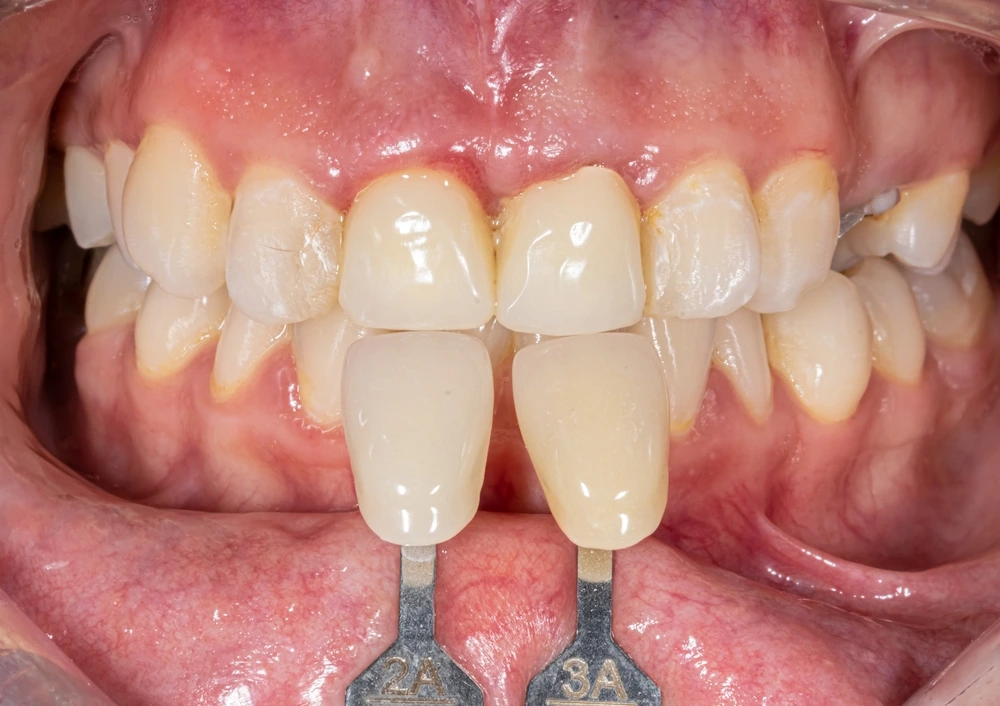
Veneers have become one of the most talked-about ways to improve a smile, but the conversation usually stops at the word itself. Once you start looking into them, a fork in the road appears: porcelain or composite. They sound similar and do a similar job, yet they are quite different in practice.
Choosing between them is not about which is better in the abstract, but which suits your teeth, your goals and how you want to get there. This article explains what veneers do, how composite and porcelain versions each work, how they compare, and what helps decide which is the right fit.
What Veneers Are and What They Fix
A veneer is a thin covering applied to the front of a tooth to change how it looks. Rather than altering the whole tooth, it resurfaces the visible part, which is why veneers are a cosmetic rather than a structural fix.
They are typically used to address chips, small gaps, uneven shape, worn edges or stubborn discolouration that does not respond to whitening. Often they are applied to several front teeth to create an even, balanced look.
Because veneers are cosmetic, the starting point is always healthy teeth and gums. A dentist checks the foundations first, since veneers enhance a smile rather than treat underlying problems.
It also helps to be clear about what veneers will not do. They do not replace orthodontics for significant alignment issues, nor do they fix decay or gum disease, which are treated in their own right. Thinking of veneers as a finishing touch, rather than a cure-all, sets the right expectation.
Composite Veneers: How They Work
Composite veneers are built directly onto the tooth using tooth-coloured resin, the same family of material used in modern fillings. The dentist shapes and sculpts the resin by hand, then sets and polishes it.
Their appeal is in being more conservative and usually quicker, often completed in a single visit, with little or no removal of the natural tooth. If one chips, it can frequently be repaired rather than remade.
The trade-off is that composite is generally less hard-wearing than porcelain and can pick up staining or wear over time. With good care it still performs well, but it tends to ask for more upkeep along the way.
Composite also suits people who want to make a change before committing to something more permanent. Because so little of the tooth is altered, it tends to leave more options open down the track, which appeals to those who are still unsure.
Porcelain Veneers: How They Work
Porcelain veneers are thin, custom shells made in a laboratory and then bonded to the teeth. Because they are crafted to a precise design, they can capture the natural translucency of enamel particularly well.
They are typically more durable and more resistant to staining than composite, which is part of why many people choose them for a long-lasting result. The flip side is that the process usually takes more than one visit and often involves preparing a small amount of the tooth surface.
That preparation means porcelain veneers are generally not reversible, so they are a more considered commitment. A dentist will talk through what is involved before anything is started.
For many people that commitment is part of the appeal, since a well-made set of porcelain veneers is designed to look natural and hold up for years. The careful planning that goes into them is what helps the result blend with the rest of the smile.
Comparing the Two
Seeing the differences side by side makes the choice clearer. Neither is simply better; they trade off in ways that matter differently to different people.
| Consideration | Composite | Porcelain |
| Typical visits | Often a single visit | Usually more than one |
| Tooth preparation | Little or none | Some surface usually prepared |
| Durability | Good, more upkeep | Generally longer-lasting |
| Stain resistance | Can stain over time | Highly stain-resistant |
| Repairability | Often easily repaired | Usually remade if damaged |
The right balance depends on your priorities, the state of your teeth and the result you are after. It is also worth weighing how visible the teeth are and how long you want the result to last, since those often tip the decision one way or the other.
Which Veneers Suit You in Wollongong
There is no universal winner. Composite often suits people wanting a more conservative, quicker change, while porcelain appeals to those prioritising longevity and stain resistance for a longer-term result.
For anyone considering veneers in Wollongong and across the wider South Coast, an assessment is the reliable way to see which option fits your teeth, your goals and how many teeth are involved.
From there, a dentist can explain what each would involve in your case, so you choose with a clear understanding rather than going on appearances alone. Seeing examples and discussing your goals in person tends to make the decision far easier than weighing it up from photos online.
The Takeaway
Porcelain and composite veneers can both transform how a smile looks; they simply get there differently. Composite is more conservative and quicker but asks for more upkeep, while porcelain is more durable and stain-resistant but a bigger commitment. The right choice depends on your teeth, your goals and what you value most, which is exactly what an assessment is for. If you are weighing up veneers, the team at Dental Corner can talk through the options and what would suit you, with no pressure to proceed.
Frequently Asked Questions
What is the difference between porcelain and composite veneers?
Composite veneers are built directly onto the tooth from tooth-coloured resin, usually in one visit with little tooth preparation. Porcelain veneers are custom shells made in a laboratory and bonded on, typically more durable and stain-resistant but involving more than one visit and some tooth preparation.
Do veneers ruin your natural teeth?
Composite veneers usually involve little or no removal of the natural tooth. Porcelain veneers often involve preparing a small amount of the surface, which makes them generally non-reversible. A dentist assesses your teeth and explains what each option involves before anything is started.
How long do veneers last?
Longevity varies with the material, your habits and how well they are cared for. Porcelain is generally longer-lasting and more stain-resistant, while composite performs well but tends to need more upkeep over time. Good oral hygiene and regular check-ups help either option last.
Are composite or porcelain veneers better?
Neither is universally better. Composite suits those wanting a more conservative, quicker change, while porcelain suits those prioritising durability and stain resistance. The best choice depends on your teeth, goals and how many teeth are involved, which an assessment helps determine.
Can veneers be whitened?
No. Like other dental work, veneers do not respond to whitening and keep the colour they were made in. If whitening is something you want, it is usually done beforehand so veneers can be matched to the desired shade. A dentist can advise on the best order.
This blog is intended for general informational purposes only and does not constitute medical or dental advice. Every patient’s oral health needs are unique. Please consult a qualified dental practitioner for advice specific to your situation. Dental Corner encourages all patients to seek a professional assessment before commencing any dental treatment.


