
Losing most or all of the teeth in a jaw, whether through gum disease, decay or years of wear, affects far more than appearance. It changes how a person eats, speaks and feels, and traditional dentures do not suit everyone who faces it.
All-on-4 is one approach to this problem: a full arch of fixed replacement teeth supported by just four implants. This article explains what All-on-4 actually is, who it tends to suit, how the process works in broad terms, and how it compares with conventional dentures, so the idea is clearer before any conversation about suitability. It is a significant decision, and a clear picture beforehand makes that conversation far more useful.
What All-on-4 Actually Is
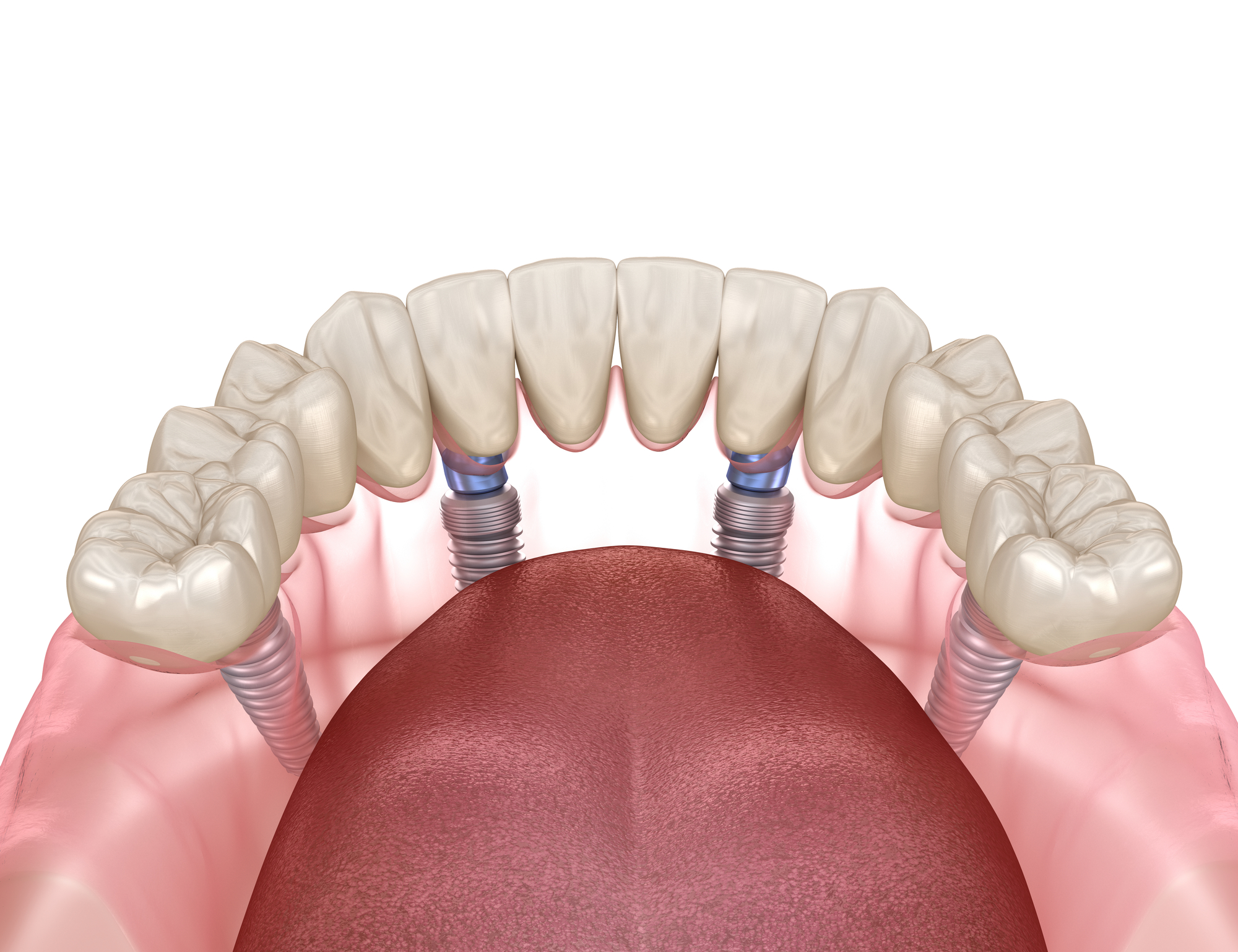
All-on-4 is a method of replacing a complete arch of teeth, an entire upper or lower set, using four dental implants as the foundation. A full bridge of fixed teeth is then secured onto those implants.
The implants act like artificial tooth roots, anchored into the jaw, while the fixed bridge sits on top as the visible teeth. Because the teeth are fixed rather than removable, they stay in place rather than being taken out at night.
It is often considered for total rehabilitation where teeth are badly broken down, decayed or compromised by gum disease. The aim is to restore both function and appearance in a stable, fixed way.
The name refers to the four implants used as anchors, which are positioned to make the most of the available bone. Using a planned number of well-placed implants is what allows a full arch of teeth to be supported securely.
Who It Tends to Suit
All-on-4 is generally aimed at people who have lost, or are about to lose, most or all of the teeth in an arch. That includes those with extensive decay, advanced gum disease, or failing teeth that cannot be saved.
It is also considered by people who struggle with the fit, movement or feel of conventional dentures and want something fixed instead. For many, the appeal is being able to eat and speak with more confidence.
It is not the right answer for everyone, though. Suitability depends on factors such as general health and the condition of the jawbone, which is why a thorough assessment comes first rather than assuming it is an option.
Lifestyle and expectations matter in the conversation too. All-on-4 is a meaningful undertaking, and understanding what it involves, along with what it can and cannot do, helps people decide whether it genuinely fits their situation.
How the Process Works
While every case differs, the broad path is similar. It begins with a detailed assessment and planning stage, usually including scans, to map out the jaw and decide whether the approach is suitable.
The four implants are then placed into the jaw, and a fixed set of teeth is attached so the arch is restored. A healing period follows, during which the implants integrate with the bone, before the final teeth are completed.
Throughout, a dentist explains each stage, the timeframes involved and the aftercare needed. It is a considered process rather than a quick fix, and understanding the steps in advance makes it far less daunting.
Aftercare and ongoing maintenance are an important part of the picture. Like natural teeth, implant-supported teeth need regular cleaning and check-ups so the implants and gums stay healthy, which helps protect the result over the long term.
All-on-4 Compared With Dentures
For people weighing up their options, the most common comparison is with conventional dentures. Both replace a full arch, but they feel and function quite differently day to day.
| Consideration | All-on-4 | Conventional dentures |
| In the mouth | Fixed in place | Removable |
| Stability | Anchored to implants | Rests on the gums |
| Taken out at night | No | Usually yes |
| Cleaning | Cleaned in place | Removed to clean |
Neither is automatically the right choice; it depends on the individual, their jaw and their preferences. What matters most is how each option would work for your daily life, which is worth talking through honestly.
Considering All-on-4 in Wollongong
Because All-on-4 is a significant treatment, the most important step is finding out whether it genuinely suits your situation rather than deciding based on what worked for someone else. Every mouth is different, and what transformed one person’s eating and confidence may not be the right path for the next.
For anyone considering All-on-4 in Wollongong and across the wider South Coast, a detailed assessment is the only reliable way to confirm suitability and map out what would be involved.
From there, a dentist can explain the options clearly, including alternatives, so any decision is well informed and made at a comfortable pace. There is no obligation at an assessment; its purpose is simply to give you the facts you need to decide.
The Takeaway
All-on-4 offers a way to replace a full arch of failing or missing teeth with a fixed set supported by four implants, restoring both function and appearance for people who suit it. It is not right for everyone, and a thorough assessment of your health and jaw comes first. If extensive tooth loss or struggling dentures have been weighing on you, the team at Dental Corner can assess your situation and explain whether All-on-4, or another option, would suit you, with no pressure. A proper assessment is the place to begin.
Frequently Asked Questions
What is All-on-4?
All-on-4 is a way of replacing a full arch of teeth using four dental implants as a foundation, with a fixed bridge of teeth secured on top. The implants act like artificial roots, and the teeth stay in place rather than being removable like conventional dentures.
Am I a candidate for All-on-4?
All-on-4 is generally considered for people who have lost, or are losing, most or all teeth in an arch, or who struggle with dentures. Suitability depends on general health and the condition of the jawbone, so a thorough assessment is needed to confirm whether it is appropriate.
Is All-on-4 the same as dentures?
No. Conventional dentures are removable and rest on the gums, while All-on-4 teeth are fixed onto implants and stay in place. Many people choose All-on-4 for that stability, though dentures remain a suitable option for others. A dentist can explain which fits your situation.
How long does All-on-4 treatment take?
It varies by case. The process involves assessment and planning, placing the implants and attaching teeth, then a healing period while the implants integrate with the bone before the final teeth are completed. A dentist will outline the likely timeframes for your individual situation.
How do I care for All-on-4 teeth?
All-on-4 teeth are cleaned in place rather than removed, and a dentist will explain the specific cleaning routine and tools to use. Regular check-ups remain important so the implants and surrounding gums can be monitored and kept healthy over the long term.
This blog is intended for general informational purposes only and does not constitute medical or dental advice. Every patient’s oral health needs are unique. Please consult a qualified dental practitioner for advice specific to your situation. Dental Corner encourages all patients to seek a professional assessment before commencing any dental treatment.


